
Mission, TX · Garage Door Service
What Heat and Power Outages Do to Mission Garage Door Openers
How Mission's 1987-2005 housing stock and severe heat affect garage door openers during power outages, and what to check before you call for a repair.
- Repairs & new doors
- Springs & openers
- Serving 5 nearby communities
What Changes With the Season
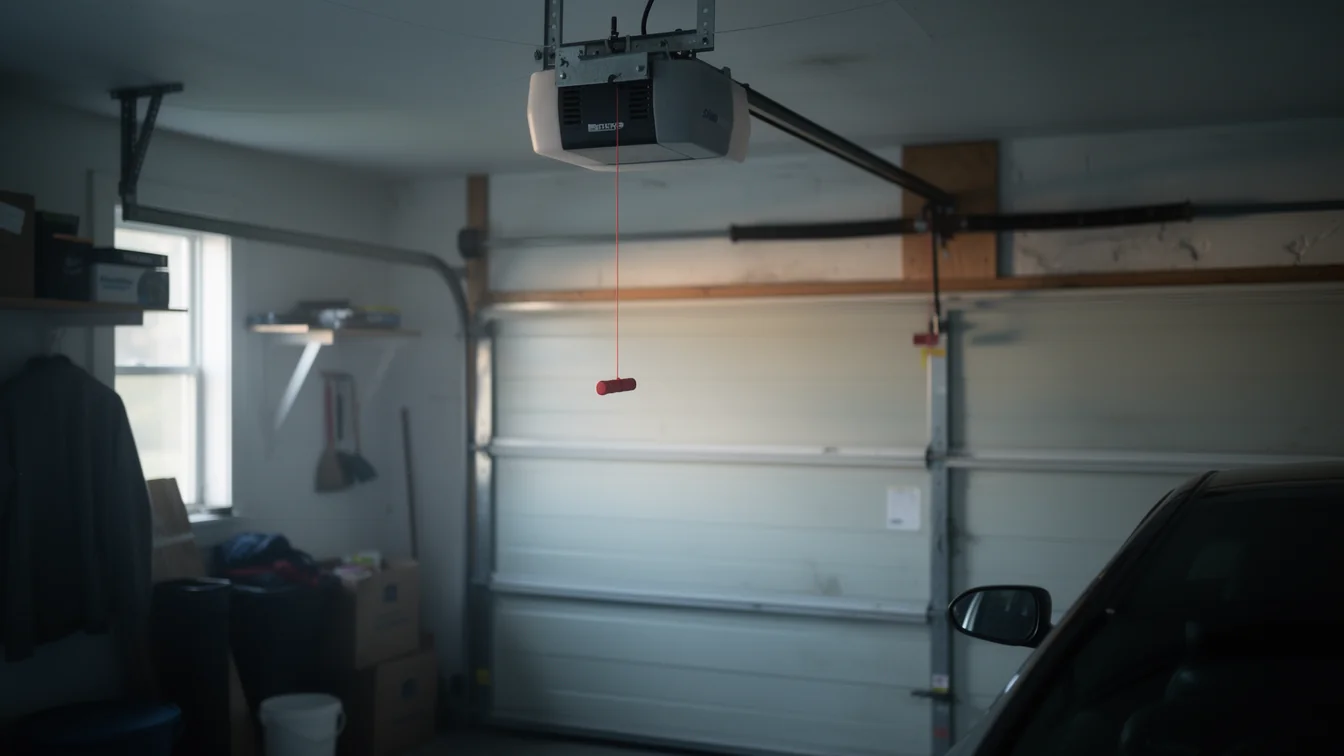
Most houses in Mission went up between 1987 and 2005, with the median build year landing around 1997. That means the bulk of the openers out there are chain or belt drive units installed during that window, now pushing twenty-five to thirty-five years old. In a severe heat climate, the motor housing on these older units sits in attic-adjacent garage space that can run well past 110°F for stretches of the summer. Capacitors age faster in that kind of sustained heat than they would in a milder zone, and that's usually the first part to fail quietly, not the motor itself.
When the grid takes a hit during peak-demand afternoons, which happens more in a heat-heavy area like this one, openers on these vintages often don't restart clean. The logic board resets, but the travel limits don't, and the door either stops short or slams the last few inches on the way down. If your house falls in that late-80s-to-mid-2000s build band, that's the mechanism to watch for, not a dead battery.
What to Check
Start with the wall switch, not the remote. If the wall button does nothing either, it's a power or board problem, not a signal problem, and no amount of remote reprogramming will fix it. Next, check the outlet the opener plugs into. A lot of garages built in this era run the opener off a shared circuit with the exterior lights, and a heat-driven AC surge can trip that breaker without you noticing the garage went dark too.
If power's confirmed and the opener still won't respond, look at the wall console for a blinking light pattern. Most units from this build period use blink codes to flag a limit or safety-sensor fault, and after a power outage those sensors can end up slightly out of alignment just from the jolt. A straightened sensor eye often solves what looks like a dead opener. What we don't recommend is forcing the door by hand repeatedly to test it after a cut - on an older chain-drive unit, that can strip the drive gear, and that part is a wait-on-order item, not a same-day fix.
The Problem
The real issue isn't the power outage itself, it's what severe heat does to the opener year-round before the cut ever happens. Heat breaks down the lubricant in the drive mechanism faster than the manual says, and it shortens the working life of the start capacitor well under its rated years. By the time a summer power interruption hits, a lot of these units are already running on borrowed margin. The cut just exposes what heat had already weakened.
Across the 26 named communities in this service area - from Palmview South three miles out to places like Alamo and La Joya further down the road - the housing stock skews heavily toward that same 1980s-90s build era, so this isn't a one-street problem. It's a function of when this part of the valley got built and what the summers have done to those units since. One limitation worth naming here: if an opener has already been through two or three capacitor failures, replacing the part again usually isn't worth it. At that point a new unit costs less over the next five years than another round of patch repairs.
What Local Conditions Do
Severe heat doesn't just stress the opener motor - it affects the whole system the opener has to fight against. Steel panels expand slightly in daytime heat and contract overnight, and on doors original to the 1987-2005 build era, that cycle has been repeating for two to three decades. Tracks that were set true when the house was framed can be a hair out of alignment now, and an opener working against a slightly bound track draws more current and runs hotter, which shortens its own life further.
With roughly 43,024 owner-occupied houses across this service area, most sitting in that same climate band, the pattern repeats block after block: heat-fatigued capacitor, slightly misaligned track, opener pulling harder than it should. None of that shows up until a power outage forces a restart and the unit can't recover cleanly. Keeping the track lubricated and the sensors aligned doesn't prevent heat aging, but it does mean the opener isn't fighting two problems at once when the power comes back on.
Frequently asked questions
Why does my opener stop working after the power comes back on, not during the outage?
The outage itself rarely breaks anything. It's the restart that exposes a weak capacitor or a limit setting that didn't hold. On openers from the 1987-2005 build era common in Mission, that restart jolt is often the final push on a part that heat had already been wearing down for years.
Is my opener too old to repair after a power surge?
Depends on history. If this is the first capacitor or board failure, repair usually makes sense. If you've replaced the same part two or three times already, a unit from that build era is often past the point where repair costs less than replacement over the next few years.
Does the heat really affect the opener that much?
Yes - severe heat shortens capacitor and lubricant life faster than a mild climate would, which is why openers here tend to show age-related failures sooner than the same unit would in a cooler region.
Related garage door services in Mission
More garage door guides
Book garage door service in Mission
Call now or request a quote - tell us what the door is doing and where you are.