
Mission, TX · Garage Door Service
Garage Door Roller Replacement in Mission, TX
Roller replacement for homes across the Mission, TX service area, where 1987-2005 housing stock and severe summer heat wear nylon rollers out faster than most places.
- Repairs & new doors
- Springs & openers
- Serving 5 nearby communities
How It Shows Up
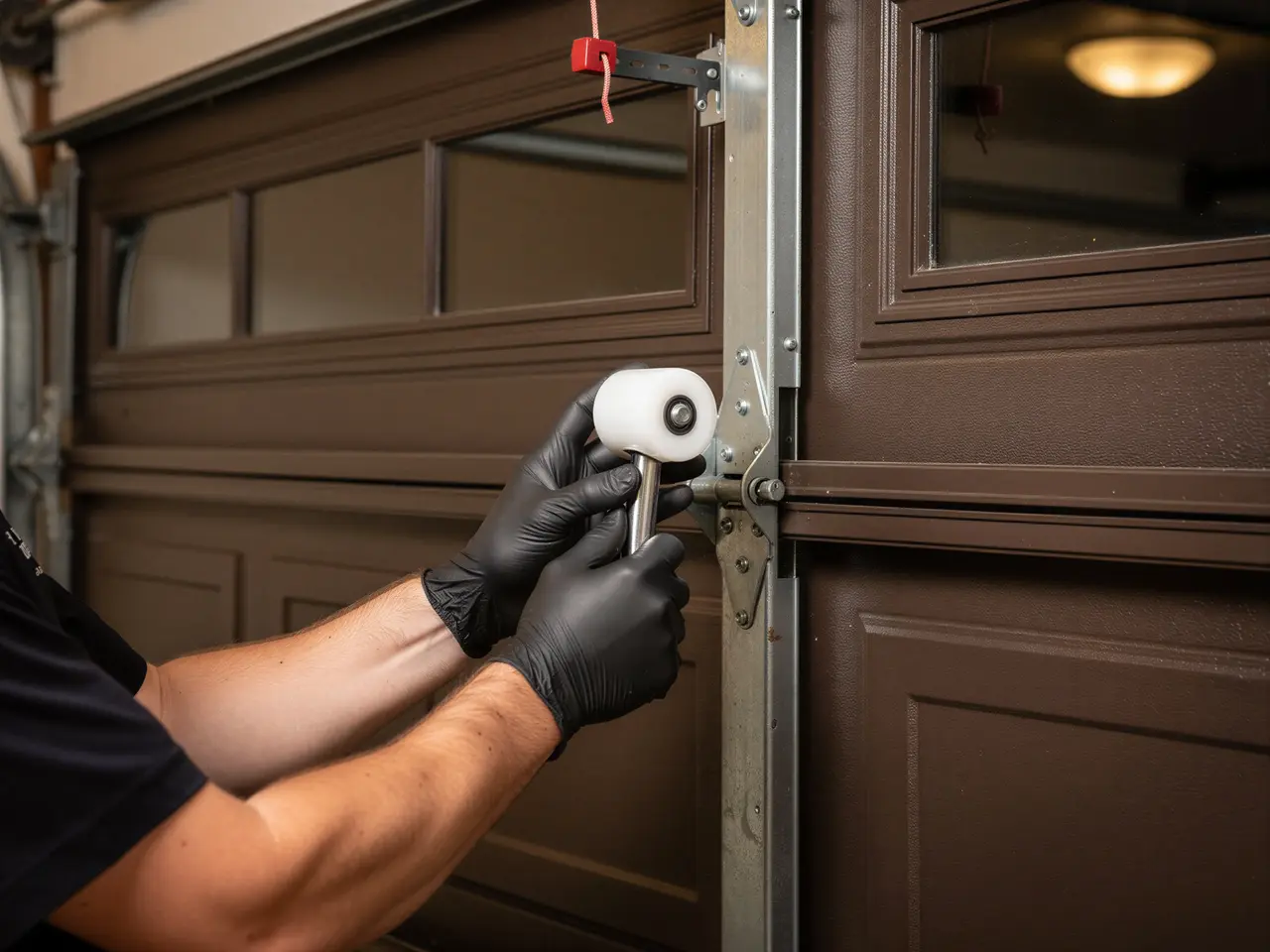
The first sign is usually noise. A door that used to run quiet starts grinding or squeaking as it goes up and down, and the sound gets worse on the hottest afternoons. Look closer at the track and you'll often see flat spots worn into the roller wheels themselves, or chunks of nylon missing where the roller meets the rail. Some doors start jumping slightly in the track, especially near the bottom panel, because a worn roller no longer sits square in the channel. Steel rollers on older setups show rust streaks down the track instead of cracking, but the end result is the same - binding, extra strain on the opener, and a door that feels like it's fighting you on the way down. If you catch it at the squeak stage, it's a straightforward roller swap. If you wait until the door is jumping the track on a hot day, you're often looking at a bent track section too, which turns one job into two.
Why It Happens Here
A lot of the housing across this service area went up between 1987 and 2005, with the median build year landing around 1997. That means a huge share of garage doors still running today have original rollers - plastic or nylon wheels that were never meant to last three decades. Add in the climate here, which sits in a severe heat band for most of the year, and you get a specific failure pattern: the sun-facing side of the garage runs hot enough, hour after hour, that nylon rollers go brittle and start shedding material years before they would in a milder climate. Steel-wheeled setups from the same era don't crack, but they dry out and rust without regular lubrication, which is just as common given how many of these doors get maintained on a "call when it breaks" schedule rather than a yearly check. Across the roughly 43,024 owner-occupied houses with garages in this area, that combination - 1990s hardware plus consistent heat - is the main reason roller replacement is one of the calls we get most.
Where This Job Goes Sideways
A roller swap sounds simple, and on a lot of doors it is: pull the old roller stem out of the hinge, drop a new one in, check the track alignment, done. Where it goes sideways is when the rollers wore unevenly for a long time before anyone noticed, because an uneven roller pulls the track out of plumb as it fails. By the time you're replacing the rollers, the track itself is bent or the brackets holding it to the frame have loosened. Swap the rollers and bolt them into a track that's still out of alignment, and you'll be back to the same grinding noise within a few months. The honest answer: if the track shows a visible bow or the door has been jumping the rail for a while, roller replacement needs to come with a track check, not instead of one. Skipping that step is the single most common reason a roller job doesn't hold.
The DIY Question
Replacing rollers on the bottom two panels of a garage door is within reach for a lot of owners - the stems lift out of the hinge brackets without touching any spring tension, and the parts aren't expensive. The trouble starts higher up. The top roller on each side sits near the torsion spring and the cable drum, and working that close to a loaded spring is where DIY roller jobs turn into trips to urgent care. We're not going to tell you every roller swap needs a truck - it doesn't. But if your door uses a torsion spring system (most doors built across this service area do), the top rollers are not the place to start learning. If you're only dealing with squeaky bottom rollers and the track looks straight, that's a reasonable weekend job. Anything involving the top track or a door that's already jumping the rail is worth a second set of eyes before you start.
Frequently asked questions
How do I know if it's the rollers or the opener?
If the door grinds, squeaks, or jumps slightly in the track but the opener motor sounds normal and the door moves at a steady speed otherwise, it's usually the rollers, not the opener. If the opener strains, reverses on its own, or the remote is unreliable, that points elsewhere.
Why do rollers wear out faster here than other places?
Severe summer heat is hard on nylon roller wheels, and a lot of homes in this service area still run original rollers from houses built in the 1987-2005 window. Heat plus age is a worse combination than age alone.
Can I replace just the worn rollers and leave the rest alone?
Often yes, if the track is still straight and the rest of the hardware is sound. But if the rollers wore unevenly for a long time, check the track alignment first - replacing rollers in a bent track just wears the new ones out fast too.
Does roller replacement fix a noisy door completely?
Usually, if rollers were the main noise source. If the hinges are also worn or the track brackets are loose, you may still hear some noise after the roller swap, since those are separate parts doing separate jobs.
Related services
Book garage door service in Mission
Call now or request a quote - tell us what the door is doing and where you are.