
Mission, TX · Garage Door Service
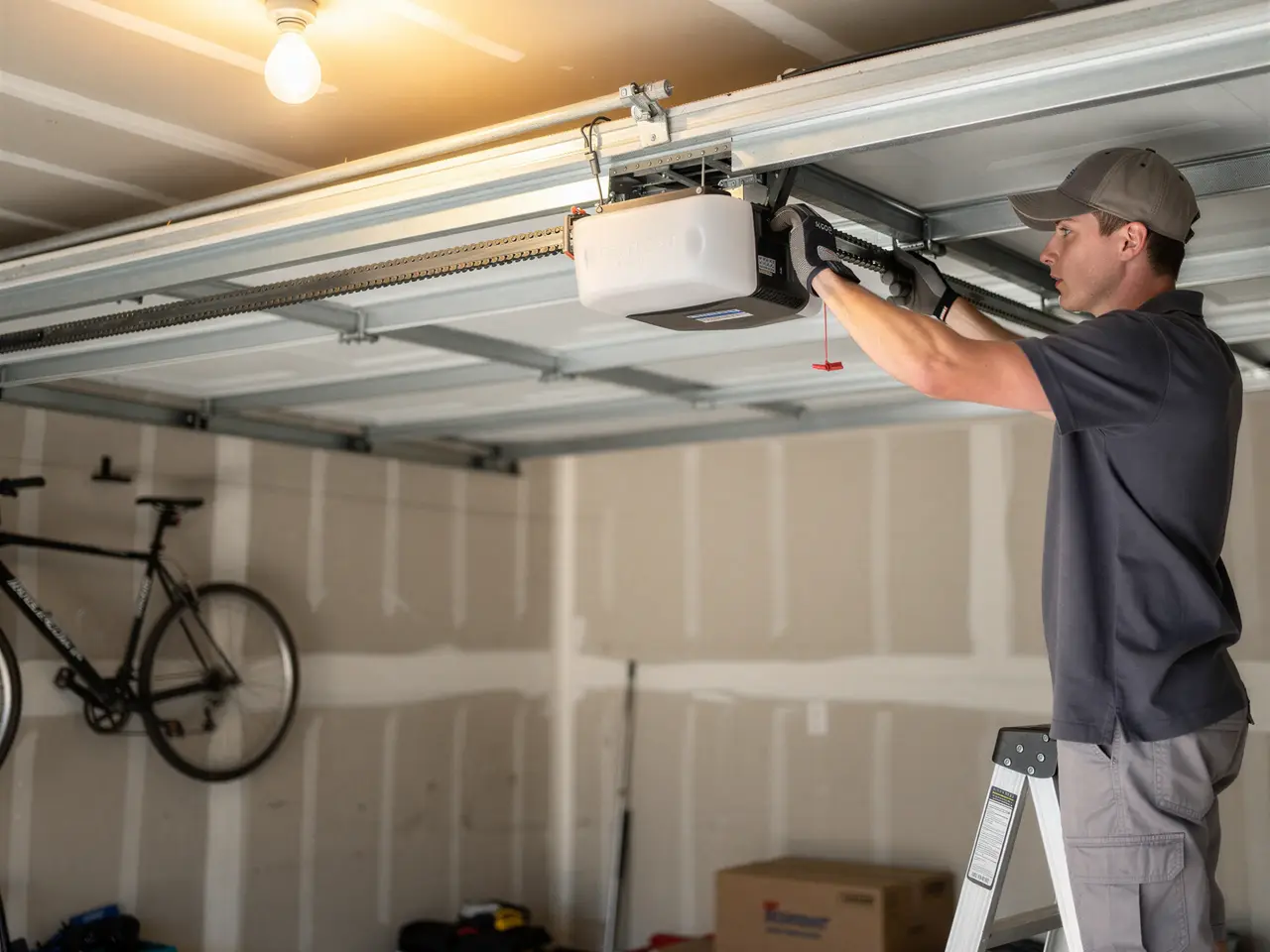
Garage Door Opener Repair for Mission Homes
Opener failing in the Mission heat? We fix dead openers, bad sensors, and worn-out motors on homes built from the late 80s through the mid-2000s across the Valley.
- Repairs & new doors
- Springs & openers
- Serving 5 nearby communities
How It Shows Up
The opener usually tells you something's wrong before it quits outright. The motor hums but the door doesn't move. The remote works from the driveway but not from the street. The light blinks a code you've never seen, or the door reverses halfway up for no reason you can spot. Some mornings it runs fine; by afternoon, after the garage has baked all day, it won't respond at all.
That heat-of-day pattern is the biggest tell we see on service calls. A logic board that works at 7 a.m. and fails at 3 p.m. isn't broken in the way a snapped cable is broken - it's thermally stressed, and it'll keep doing this until the board or the capacitor inside it gets replaced. Photo-eye sensors drift out of alignment too, usually from a bumped bracket or settling slab, and the door refuses to close as a safety response, not an opener fault at all. Knowing which of these you've got before a tech shows up saves you a second trip and a second invoice.
Why It Happens Here
Most of the housing across this service area went up between 1987 and 2005, with the typical build year sitting around 1997. That means a huge share of openers out there are either original to the house or one replacement cycle in - chain and belt-drive units from the 90s and early 2000s with circuit boards that were never built for a climate this severe. Garages here don't get a break from the heat the way they might further north; the box that holds the opener sits closed and un-vented most of the day, and the electronics inside take that load every single afternoon, year after year.
Across the roughly 78,500 households and 43,000 owner-occupied houses in this area, that adds up to a lot of openers running past the point their components were rated for. It's not that the units are cheap - it's that heat-soak fatigue on a board or a capacitor doesn't announce itself with a bang. It shows up as the pattern above: fine in the morning, dead by afternoon, intermittent for weeks before it finally quits for good.
Where This Job Goes Sideways
The mistake we see most is swapping the opener when the real problem is the spring or the track, or vice versa - paying for a new motor when a $40 sensor bracket was the actual fault. A door that's heavy to lift by hand because of a weak spring will also strain and eventually kill an opener motor that's otherwise fine; replace the motor alone and you'll be back here in six months once the new one burns out the same way.
The other place this goes wrong is parts. Openers from the late 80s through the 90s used drive systems and logic boards that aren't stocked the way current models are. If yours is one of those original units - which, given the median build year in this area, a lot of them still are - a board-level repair sometimes isn't realistic, and replacement ends up cheaper than waiting on a part. We'll tell you straight when that's the case instead of running the clock on a repair that won't hold.
The DIY Question
Realigning a photo-eye sensor or swapping remote batteries is fair game to try yourself before you call anyone - it fixes a surprising number of "the opener's dead" calls for free. Checking that the wall button and the remote both fail the same way tells you whether the problem is at the unit or further down the line.
What we don't recommend touching: anything inside the opener housing, the limit switch adjustments, or the drive gear. Low-voltage control wiring is safe to look at; the motor and board are not something to open up without the right meter and the part numbers in hand, especially on an older unit where one wrong adjustment can strip a plastic gear that's no longer sold separately. Our honest limitation here: we don't carry every obsolete board for every opener made in the last 35 years, and on some of the oldest units in this area's housing stock, replacement is the faster, cheaper path even if the motor itself still spins.
Frequently asked questions
Why does my garage door opener only fail in the afternoon?
Heat soak. The opener's circuit board sits inside a closed box that bakes all day in this area's climate, and components that read fine cool in the morning can fail once they heat up. It's a sign the board or a capacitor is going, not random bad luck.
Is it the opener or the spring?
If the door is hard to lift by hand with the opener disconnected, that's spring tension, not the opener. If the motor runs but the door won't move, or the remote and wall button behave differently, that points to the opener itself.
Can you still get parts for an older opener?
Depends on the unit. A lot of houses in this area were built between 1987 and 2005, so plenty of openers out there are original. Some boards for units that old aren't stocked anymore, and replacement ends up the more practical fix.
Will a new opener keep failing in the heat the same way?
Current units handle heat soak better than boards from the 90s, but no opener is immune to a garage that runs hot all afternoon. Keeping the garage vented or adding shade to the door helps more than any one brand of opener will.
Related services
Related guides
Book garage door service in Mission
Call now or request a quote - tell us what the door is doing and where you are.