
Mission, TX · Garage Door Service
Garage Door Cable Repair Across the Mission Service Area
Garage door cables in Mission, TX fail differently than they do up north. See how heat and 1980s-2000s housing stock drive cable wear, and what a real fix involves.
- Repairs & new doors
- Springs & openers
- Serving 5 nearby communities
How It Shows Up
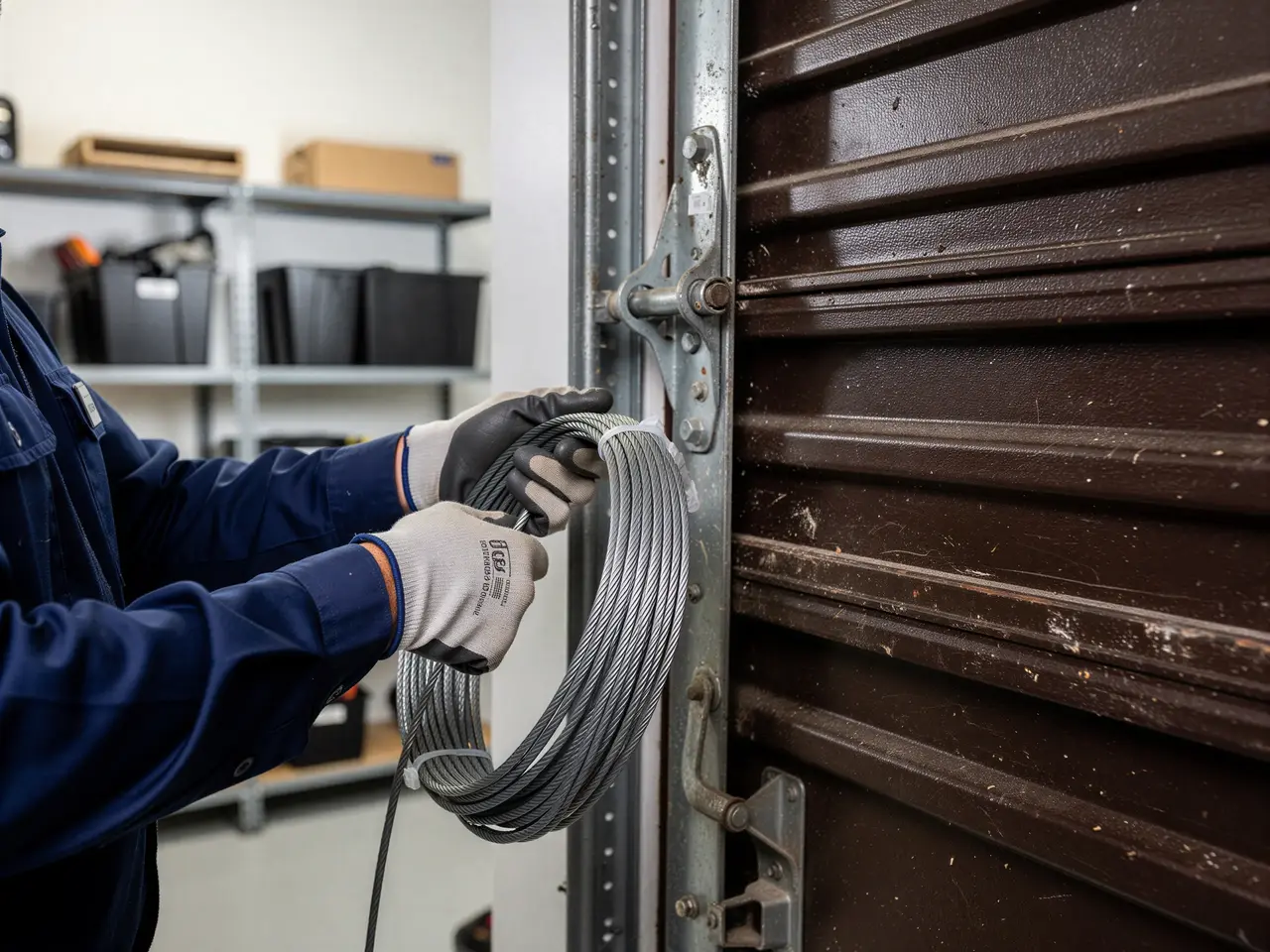
A cable failure rarely announces itself all at once. More often it starts small: the door hangs a little crooked when it's halfway up, or one side drags while the other side moves fine. Look at the cable itself and you'll usually see the tell - frayed strands sticking out like a broom, or a shiny groove worn into the drum where the cable has started to slip instead of winding cleanly. If a cable snaps outright, the door will drop hard on one side, sometimes jamming sideways in the tracks, sometimes coming off the rollers entirely. You might hear it before you see it - a loud pop or a metallic clatter as the slack cable whips free. On double doors especially, a single broken cable puts the whole panel under uneven load, which is why what looks like a one-cable problem often turns into bent track or a cracked bottom panel if it sits too long. None of this is a cosmetic issue. A door hanging on one working cable is still under spring tension, and that's not a stable thing to leave alone.
Why It Happens Here
Most of the houses across this service area - roughly 43,024 owner-occupied homes spread over 78,541 households - went up between 1987 and 2005, with the bulk of that stock dating to the 1980s and 90s. That puts a lot of original lift cables well past the 20- to 25-year mark where galvanized wire starts losing its coating and the strands underneath start work-hardening and snapping. Add in a severe-heat climate band, and you get a faster version of the same wear you'd see anywhere else: heat dries out drum and pulley lubrication quicker, cable sheathing gets brittle sooner, and the daily expansion-and-contraction cycle on hardware that sits exposed in a garage adds up faster than it would in a milder climate. We also see a pattern tied to the median household income here, around $48,777 - a lot of owners wait out the dragging, squealing, or crooked-door phase longer than they should, which means the cable is often already down to a few strands by the time we get the call instead of just starting to fray.
Where This Job Goes Sideways
Cable repair looks simple from the outside - unhook the old one, hook up the new one - and that's exactly how people get hurt. The cable is only half the story; the other half is the torsion or extension spring holding the door's weight, and that spring stays loaded whether the cable is intact or not. Pull a cable off a wound spring without locking the drum first and you've got several hundred pounds of stored force with nowhere controlled to go. The other way this goes wrong is quieter but still costly: using the wrong cable gauge or length for the drum. Across the 1980s and 90s stock that makes up most of this area, drum sizes and cable specs are consistent enough that a mismatched replacement is one of the most common mistakes we see - it looks fine going on, then it slips, stretches unevenly, or wears through the new drum groove in a fraction of the time it should last. A repair that doesn't match the original hardware spec isn't really a repair, it's a second failure waiting on a calendar.
The DIY Question
We'll say it plainly: cable work is not a good first DIY project on a garage door. The honest limitation here is that there's no safe way to release a wound spring without the right winding bars and clamps, and a slipped bar under tension has put people in the hospital. If a cable has already snapped and the door is down, the safest move is to leave it down, keep the opener off, and call someone who can relieve the spring tension before touching the cable. Where a homeowner can reasonably help themselves is in catching the early signs - a cable that looks frayed, a door that sits crooked, a drum with a visible groove - and getting it looked at before it snaps instead of after. That's the one part of this job that's genuinely DIY: noticing it early. The cable swap itself, and the spring tension behind it, isn't a bet worth placing on a Saturday afternoon.
Frequently asked questions
How do I know if it's the cable or the spring that failed?
If the door dropped suddenly and hangs crooked or off its tracks on one side, that's almost always a cable. If the door feels uniformly heavy, won't stay open, or the opener strains against it, that usually points to a spring. Both can fail around the same time since a broken cable puts extra load on the spring system, so a tech will check both.
Can I just replace one cable and leave the other?
On a double door especially, we don't recommend it. If one cable has worn through from age or heat exposure, the other one on the same door has seen identical conditions and is likely close behind. Replacing both at the same time costs little extra labor and saves you a second service call a few months later.
Why does my cable keep slipping instead of snapping?
That's usually a drum or pulley issue rather than the cable itself - a worn groove lets the cable ride up or bunch instead of winding evenly. It's worth having both the cable and the drum checked together, since a new cable on a worn drum will just start slipping again.
Book garage door service in Mission
Call now or request a quote - tell us what the door is doing and where you are.