
Mission, TX · Garage Door Service
What a Service Call Actually Covers Here in Mission
Mission Garage Door Co explains what a real service call covers for homes built 1987-2005 across Mission's 26 named areas, from heat-worn springs to warped panels.
- Repairs & new doors
- Springs & openers
- Serving 5 nearby communities
What Changes With the Season
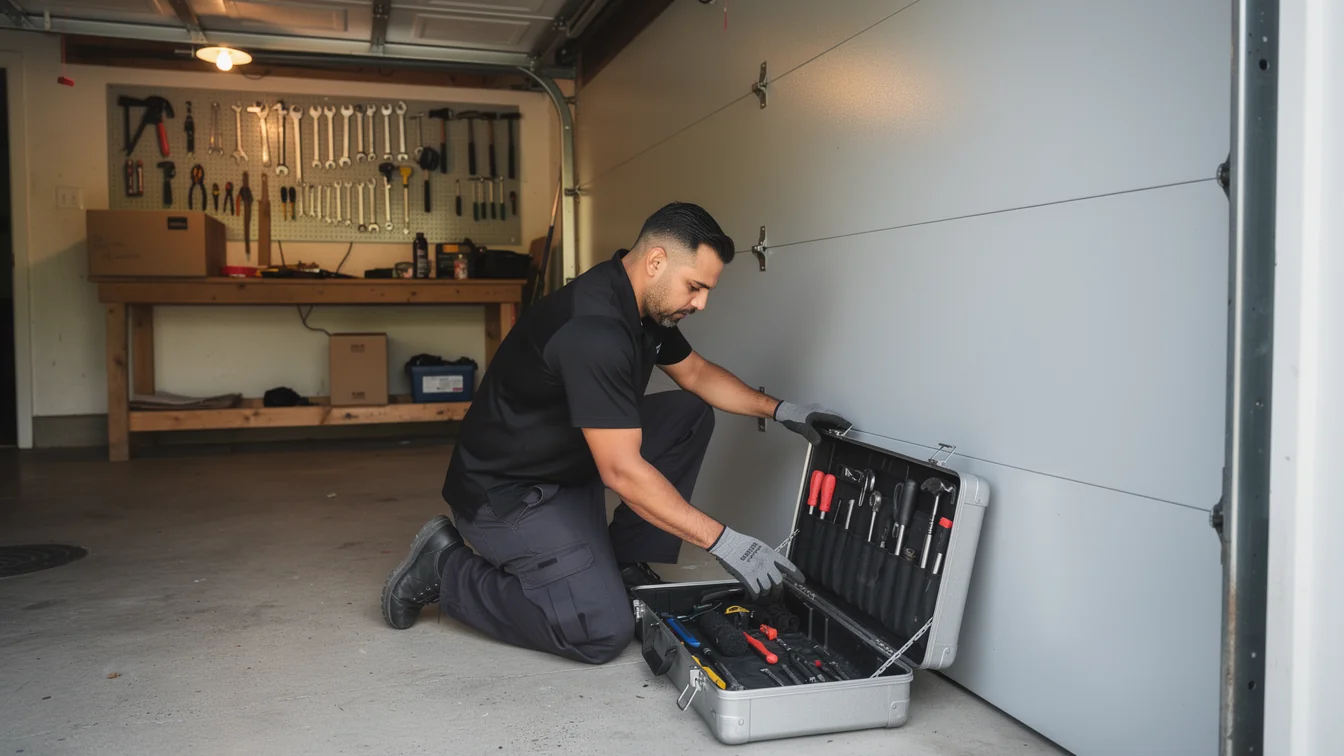
Mission sits in a severe heat climate band, and that's the single biggest thing that shapes what we find on a service call here. Steel expands and contracts all year, not just in a July spike. Nylon rollers and plastic idler bearings that would last a decade in a mild climate get brittle and crack early here, usually around the five-to-seven year mark on a door that sees direct afternoon sun. Torsion springs lose tension faster too, because the cycle of heat-expansion and overnight cool-down fatigues the coil wire. On a service call we're checking spring wind and gap, not just whether the door goes up and down. We'll also check weatherstripping at the bottom panel - it dries out, shrinks, and lets heat and dust into the garage, which matters if the garage shares a wall with living space, common in homes built here from the late 1980s through the mid-2000s.
What to Check
Most of the housing stock we work on across Mission and the surrounding named areas - Palmview South, Palmview, Palmhurst, Abram, and the rest - was built between 1987 and 2005, with a lot of it clustered around 1997. That means standard torsion systems on steel sectional doors, usually 2-inch shaft, and openers that are now on their second or third unit since the house was built. A service call starts with the track alignment and the cable drums, since original brackets on a 25-to-35-year-old house have usually been drilled and redrilled at least once. We check the panels for warping, which shows up as a door that binds on one side - heat does this to thinner steel faster than people expect. We also check the opener's force settings, because a door that's been adjusted wrong will slam the last six inches, and on these older frames that stress adds up fast.
The Problem
The honest problem on most calls in this area isn't the opener - it's a torsion spring sized for 1990s door weight that's now lifting a heavier insulated replacement panel, or a spring that was never re-tensioned after a panel swap. We see this a lot on houses from the 1987-2005 build era because the original hardware is still in, just tired. The fix sometimes isn't a full system replacement. If the track is straight and the drums aren't gouged, we'll re-spring and move on - no reason to sell a full door when the problem is one part. That said, if the bottom panel is rusted through or the track has been bent and straightened more than once, patch repair isn't worth your money, and we'll tell you that on the call instead of billing you twice.
What Local Conditions Do
Heat is the constant load on every door in this area, and it doesn't take a storm to cause damage - it's the daily cycle. A garage door in Mission goes through more thermal stress in a single August week than a door in a milder climate sees in a season, and that shows up first in the small parts: nylon rollers, plastic end bearings, lubricant that cooks off the spring coils faster than the label suggests. Across the service area's roughly 43,000 owner-occupied houses, the ones built in that 1987-2005 window are hitting the age where original hardware and original openers are both due. We price work with that in mind - median household income here runs around $48,800, so we'll always flag the cheaper fix first if it's a safe one.
Frequently asked questions
Why do garage door parts wear out faster here than other places I've lived?
Mission sits in a severe heat climate band, and the daily swing between hot afternoons and cooler nights fatigues springs and dries out plastic rollers and bearings faster than a milder climate would. It's not one event, it's the repeated cycle, which is why parts rated for ten years often need attention closer to five or seven here.
My house was built in the mid-1990s - is the original opener still safe to use?
Plenty of openers from that era still run, but most homes in this area that went up between 1987 and 2005 are now on a second or third opener. If yours is original, we'd check the force settings and safety reverse on the call - those wear mechanically and don't always fail in an obvious way.
Do you always recommend replacing the door instead of repairing it?
No. If the track is straight and the drums aren't gouged, a re-spring or roller swap is often the right call and the cheaper one. We only recommend replacement when the panel is rusted through or the track has been bent and straightened repeatedly - at that point patch repairs stop being worth the money.
Related garage door services in Mission
More garage door guides
Book garage door service in Mission
Call now or request a quote - tell us what the door is doing and where you are.