
Mission, TX · Garage Door Service
What Mission's 1990s Housing Stock Means for Your Garage Door
Mission, TX homes mostly date to 1987-2005 and sit in a severe heat zone. See what that build era and climate mean for garage door springs and openers.
- Repairs & new doors
- Springs & openers
- Serving 5 nearby communities
What Changes With the Season
Most of the houses in this service area went up between 1987 and 2005, with the median build year landing right around 1997. That means the garage door on a lot of these homes is original equipment, and it's a steel panel door that was never built with a severe heat band in mind. When the metal cycles through the kind of sustained high temperatures this climate band produces, the panel expands, the track bolts loosen a fraction at a time, and the grease in the rollers and hinges thins out faster than it would in a milder climate. You don't get one dramatic failure. You get a door that starts running rough, then loud, then stiff, over a couple of summers. The opener's logic board takes a hit too - heat inside an uninsulated garage is brutal on older circuit boards, and a board built in the 1990s wasn't engineered for the duty cycle it's seeing now, decades later, in this kind of heat. None of this shows up overnight. It shows up as a slow creep in how the door sounds and moves, which is why most owners don't catch it until something actually lets go.
What to Check
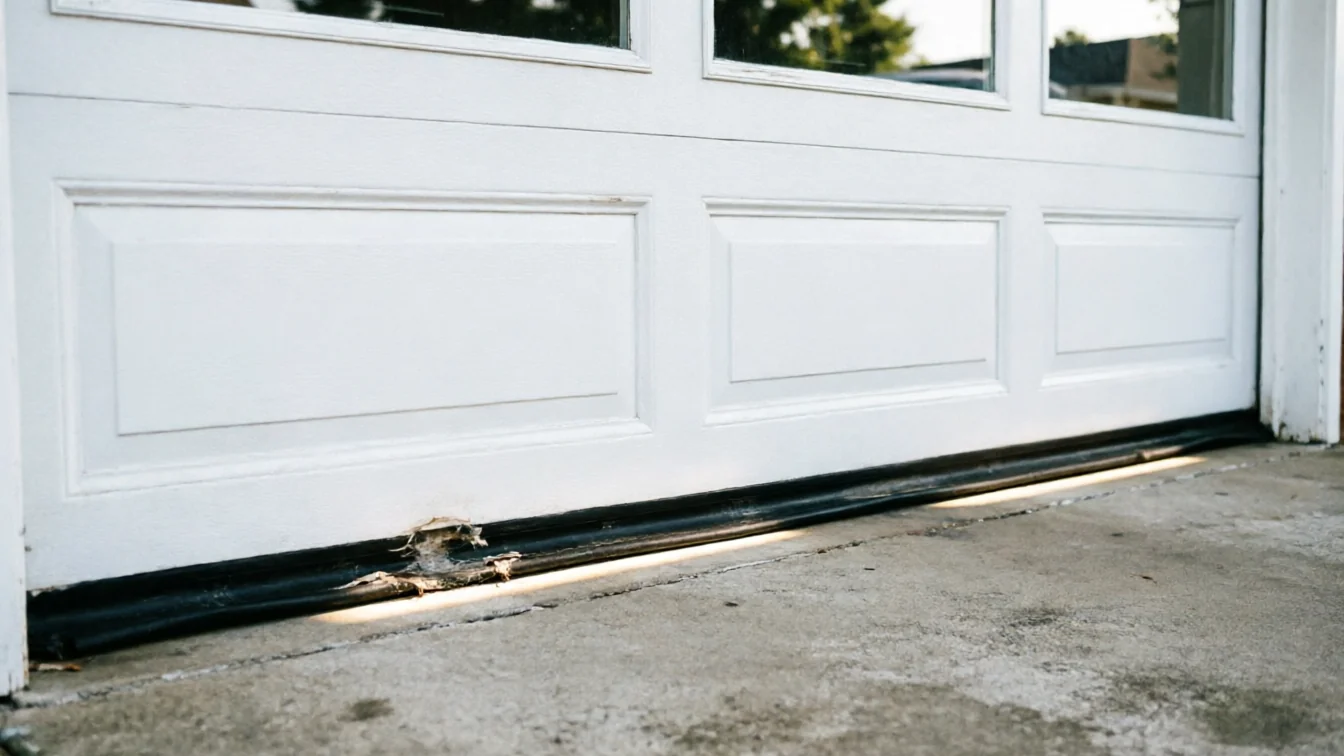
Start with the torsion spring. If your house was built in the window this area was mostly built in, 1987 to 2005, the spring on the door is either original or a direct swap from years ago, sized for a door weight that may not match what's hanging there now if panels were ever replaced. Pull the release and lift the door by hand - if it doesn't hold a few feet off the floor on its own, the spring has lost tension, and that's a heat-fatigue pattern, not a random failure. Next, the rollers. Nylon rollers from this era turn brittle and crack under repeated heat cycling; look for flat spots or flecks of nylon on the track. Check the opener's travel limits too - heat expansion in the track rail throws off the sensor alignment more than owners expect, and that shows up as a door that reverses for no clear reason. Last, the bottom seal. On a door this age it's usually hardened and cracked, not sealing against ground heat the way it did when new. None of this requires tools beyond a flashlight and your own hands. It just requires looking at the right parts, not the whole door.
The Problem
Here's the actual math. A door installed when this area was being built out, in the late 1980s through the mid-2000s, is somewhere between twenty and thirty-five years old today. Torsion springs are rated for a cycle count, not a calendar date, and severe heat shortens the practical life of that rating because the metal is working harder in every cycle. So a spring that might have lasted thirty years in a mild climate is failing closer to twenty here. The honest limitation: once an opener board from that era fails, we often can't get an exact replacement board for it - production for those specific models stopped years ago - and hunting down a compatible used board usually costs more in time than it saves. At that point, replacing the opener outright is the better call, even though it feels like more than the original problem called for. Across the 78,541 households in this service area, with 43,024 of them owner-occupied houses, a large share were never upgraded past the builder's original door and opener. That's not a guess - it's what the build-era numbers point to directly.
What Local Conditions Do
This area covers a wide stretch, from Palmview South three miles out to La Blanca twenty miles north, with Palmview, Palmhurst, West Sharyland, Abram, La Homa, Alton, Doffing, Penitas, Hidalgo, Pharr, Citrus City, La Joya, San Juan, Lopezville, North Alamo, Alamo, South Alamo, César Chávez, Sullivan City, Doolittle, San Carlos, Donna, Midway North, and Midway South in between. Across those 26 communities, the housing stock is overwhelmingly 1980s and 90s construction, which means the garage door problem described above isn't specific to one neighborhood - it's the shared condition of the whole service area. The median household income here is $48,777, which matters for one practical reason: when a spring or opener fails, most owners want the actual failed part fixed, not a sales pitch toward a full door replacement they don't need. Severe heat is hard on steel doors and nylon rollers everywhere in this coverage area the same way, regardless of which of these 26 places a house sits in. The age of the housing stock is the real variable. A door built in 1990 behaves differently under heat stress than one built in 2010, and most of what we're called out for traces back to that build-era gap, not anything unusual about a specific street or block.
Frequently asked questions
Why does my garage door act up more in the hot months?
If your house was built in the stretch most of this area went up in, 1987 to 2005, the door is old enough that heat-driven wear on the spring, rollers, and track bolts has been accumulating for two to three decades. Severe heat accelerates that wear, so symptoms - noise, stiffness, slow response - tend to show up or worsen during the hottest stretches of the year.
Is my opener too old to fix if the board fails?
Possibly. Boards from 1990s-era openers are often out of production, and sourcing an exact replacement or a reliable used one can take longer and cost more than just replacing the opener. We'll always check first, but at a certain age, replacement is the more practical call than a parts hunt.
How do I know if it's the spring or the opener?
Disconnect the opener and lift the door by hand. If it's heavy, won't hold itself a few feet up, or drops on its own, that's the spring losing tension - a common pattern in doors from this area's building era. If it lifts easily by hand but the opener won't run it, the problem is electrical or in the opener itself.
Do all the houses in this area have the same kind of door problem?
Mostly, yes. Across the 26 communities we cover, from Palmview South to La Blanca, construction is heavily concentrated in the 1980s and 90s. That shared build era, combined with the same severe heat exposure everywhere in the service area, means the wear pattern on springs, rollers, and openers is consistent house to house, more than it varies by neighborhood.
Related garage door services in Mission
More garage door guides
Book garage door service in Mission
Call now or request a quote - tell us what the door is doing and where you are.