
Mission, TX · Garage Door Service
Garage Door Installation for Mission Homes
New garage door installation for Mission, TX homes built 1987-2005, sized for Rio Grande Valley heat. Straight talk on what a new install actually involves here.
- Repairs & new doors
- Springs & openers
- Serving 5 nearby communities
How It Shows Up
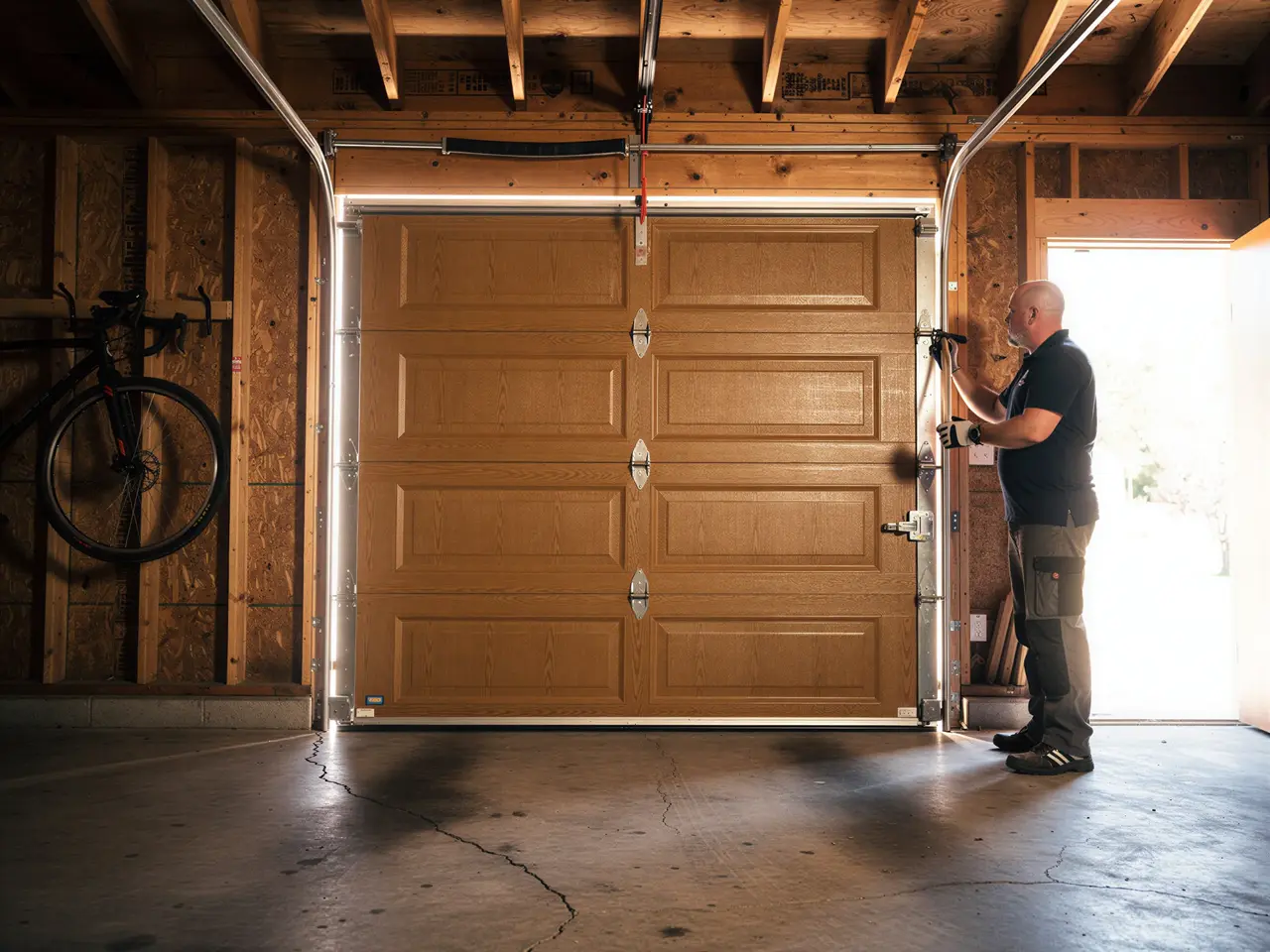
Most installation calls we get in Mission aren't about a door that broke overnight. They're about a door that's been struggling for a year or two before the owner finally calls - it drags on the track, the opener strains and groans, or the panels have started to bow and warp in the sun. Houses in this service area were mostly built between 1987 and 2005, with the median landing around 1997, so a lot of these doors are coming up on 25-plus years old. That's past the design life for most steel sections and for the springs that lift them. The failure doesn't look dramatic. It looks like a door that takes three tries to close, or one that's noticeably heavier than it used to be when you lift it manually. By the time someone calls us, the opener has usually been doing the work the spring should be doing, and that's a short road to a stripped gear or a burned-out motor. We see this pattern across the 26 named communities in this stretch of the Valley - Palmview South, Alton, La Joya, and the rest - because the building stock is consistent even where the distance from Mission isn't.
Why It Happens Here
Two things drive install failures here that wouldn't show up the same way somewhere cooler. First, the housing stock: with most homes dating to the 1980s and 90s, a large share of original doors and openers are simply at end of life at the same time, which is why we get clustered calls rather than one-off emergencies. Second, the climate band here is rated severe heat, and that matters more for garage doors than people expect. Steel panels expand and contract daily under sustained high heat, which fatigues seams and hardware faster than in a mild climate. Non-insulated doors - common in this era of build - let the garage run hot enough to cook anything stored near the ceiling and to push attached-room temperatures up if there's living space on the other side of that wall. When we spec a new install here, we're not guessing at insulation value or spring tension; we're accounting for a door that will see real heat load for months at a stretch, every year, for the life of the door.
Where This Job Goes Sideways
The mistake we see most on installation jobs isn't the door itself - it's the opener and track mismatch. A homeowner replaces an old steel door with a heavier insulated panel to deal with the heat, and the original opener from the 1990s build simply isn't rated to lift the new weight safely. That's not a cosmetic problem; an undersized opener straining against an oversized door burns out fast and can let the door drop. The second place this goes wrong is track alignment on homes where the original framing has settled over 25-plus years - not uncommon given how much of this area's stock is now in that age range. Skipping a header and jamb check to save an hour on the job means a door that looks installed but binds within six months. We'd rather spend the extra time up front than get a callback on a door we just put in.
The DIY Question
A full door replacement is not a weekend project, and we'll say that plainly. The honest limitation here: we don't recommend DIY installation on a full door and opener swap, full stop - not because the panels are hard to hang, but because torsion spring tensioning is the part that puts people in the ER, and getting it wrong on a door sized for heat-rated insulation adds weight that makes a mistake worse. Where DIY makes sense is smaller stuff: swapping weatherstripping, replacing a remote, lubricating hardware. For the install itself, with median household income in this service area at $48,777 and most households renting or owning modest single-family stock, we try to spec doors that make sense for the house rather than oversell insulation ratings nobody in this climate needs beyond a reasonable baseline. That's a judgment call we make on site, not off a price sheet.
Frequently asked questions
How old does a garage door have to be before replacement beats repair?
If the door and opener both date to the original build - common here since most homes went up between 1987 and 2005 - and you're looking at a spring job plus an opener that's already straining, replacement usually costs less over the next five years than stacking repairs on 25-year-old steel.
Do I need an insulated door in Mission's heat?
Not automatically. Insulation helps if the garage shares a wall with living space or gets used as a workspace, which matters given how severe the heat band is here. For a detached garage used for storage, a standard door with good weatherstripping is often enough, and we'll tell you if insulation isn't worth the added cost for your situation.
Will my old opener work with a new door?
Often not safely. A lot of openers installed when these houses were built in the 80s and 90s were rated for the lighter, non-insulated doors common then. If you're upgrading to a heavier insulated panel, the opener needs to be checked against the new door's weight before we hang anything.
How long does a full installation take?
We don't have a fixed number we'll quote without seeing the opening - track condition, header framing on older homes, and whether the opener needs replacing all change the timeline. We'll give you a real estimate on site rather than a placeholder number.
Book garage door service in Mission
Call now or request a quote - tell us what the door is doing and where you are.