
Mission, TX · Garage Door Service
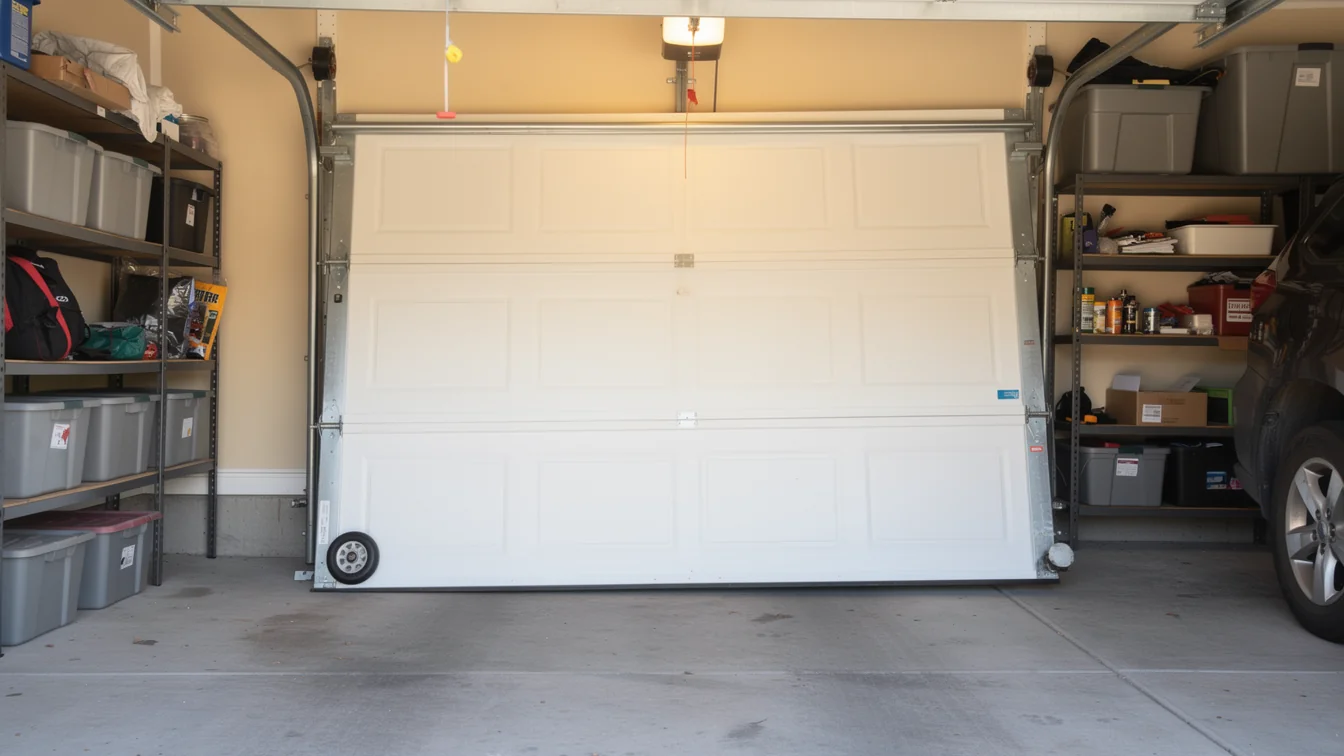
Why a Door Goes Off Track in Mission
Mission's severe heat and 1987-2005 housing stock put specific stress on garage door track. Here's what actually knocks a door off track here, and what to check first.
- Repairs & new doors
- Springs & openers
- Serving 5 nearby communities
What Changes With the Season
Mission sits in a severe heat band, and that matters more for track than people expect. Steel track rail absorbs heat all afternoon and expands, just enough to tighten the fit around the rollers riding inside it. A door that rolled smooth in the morning can start to drag by 2 p.m. because the clearance it needs has shrunk. Then the metal cools overnight and the clearance opens back up, looser than it was. That daily expand-and-contract cycle, repeated for years, is what walks bolts loose and lets the track drift out of plumb a little at a time. It's not a single hot day that does the damage. It's thousands of them. Grease dries out faster too in sustained heat, so roller friction climbs, and a roller that's fighting friction is a roller that's more likely to ride up over the track lip instead of staying seated in it. None of this shows up as a dramatic failure at first. It shows up as a door that rattles a bit more, closes a bit crooked, or needs a shove partway through the cycle. That's the track telling you it's starting to lose its line.
What to Check
Start at the brackets holding the vertical track to the jamb. On houses from the 1987-2005 wave that makes up most of Mission's housing stock, track was commonly bolted straight into wood jamb studs, and those bolts are the first hardware to work loose under repeated heat expansion. Grab the track with one hand partway up and see if it moves independently of the wall. Next, stand back and sight down the track from the floor to the top roller - it should run dead straight with no kink or bow. A kink usually means something hit the door from outside, or a roller seized and forced the track sideways under load. Check the horizontal track too, where it levels out near the ceiling; a sag there often means the rear hanger has come loose from the framing. Last, look at the rollers themselves at the bottom section, since they take the most abuse and are the easiest to spot from standing height. Worn, flat-sided rollers can't track straight no matter how good the rail is.
The Problem
Off-track almost always comes down to one of three things: a bent section of rail, a roller that's worn past round, or a bracket that's lost its grip on the frame. On the housing built in Mission between 1987 and 2005, the common failure point is the bracket, because wood jamb studs shrink slightly over decades and the lag bolts holding track brackets to them never get re-torqued. A bracket that's backed out even an eighth of an inch lets the track flex sideways every time the door runs, and flex eventually becomes a visible bow. Once the rail is bowed, the rollers inside it are being forced against one side of the channel instead of running centered, which wears them unevenly and speeds up the whole failure. A door that's badly off track on one side is also a door under uneven spring tension, which is not a job to force back into place by hand. If the bend in the rail is more than slight, straightening it rarely holds - replacing that section is usually the honest call, since a rail that's been bent once has a memory and tends to walk again.
What Local Conditions Do
Severe heat is the backdrop for almost everything that goes wrong with track here. It's not just the metal expansion - it's what heat does to the lubricant, the rubber door seals, and the wood framing underneath the brackets over a long Mission summer. Grease that's rated for moderate climates breaks down faster under sustained high temperatures, leaving rollers running drier than they should, which raises friction and makes the door work harder to stay seated in the rail. Door seals at the bottom and sides also stiffen and crack faster in severe heat, and a seal that's lost its give puts more resistance against the bottom roller right where the door starts its travel - exactly the point where off-track problems most often begin. None of that is dramatic on its own, but stacked together over years it adds up to a track system that's working against more resistance than it was built for, on hardware that's often original to a house now two to three decades old.
Frequently asked questions
Why does my garage door only go off track in the afternoon?
That's heat expansion. Mission's severe heat band pushes steel track hot enough by early afternoon that it expands slightly, tightening the fit around the rollers. If a roller is already worn or dry, that tighter fit is enough to make it catch and pop out of the channel. It usually eases once the metal cools in the evening, which is why it looks intermittent.
Can I just bend the track back myself?
You can try, but a rail that's been bent once rarely holds its shape for long. We don't recommend hand-straightening a rail with a noticeable bow - it's cheaper in the long run to replace that section than to keep re-bending it every few months as it drifts again.
How often should track hardware get checked in a house this old?
If your house falls in the 1987-2005 range common across Mission, the bolts holding track brackets to the jamb are worth checking at least once a year, especially before summer. Wood framing shrinks slightly over decades and lag bolts back out on their own under heat cycling, even without any other damage.
Is a loose bracket a DIY fix?
Tightening a bracket that's just backed out a little is straightforward. But if the wood around the bolt holes has worn soft or stripped, driving the same bolt back in won't hold - that needs a different anchor point, and it's worth having someone look at it in person rather than guessing.
Related garage door services in Mission
More garage door guides
Book garage door service in Mission
Call now or request a quote - tell us what the door is doing and where you are.