
Mission, TX · Garage Door Service
Roller Replacement for Doffing's 1990s-Era Garage Doors
Doffing homes went up mostly around 1998, right when builder-grade steel rollers wore thin after years of South Texas heat. Mission Garage Door Co handles the 6-mile run and the fix.
- Repairs & new doors
- Springs & openers
- Serving 5 nearby communities
Stocked Parts
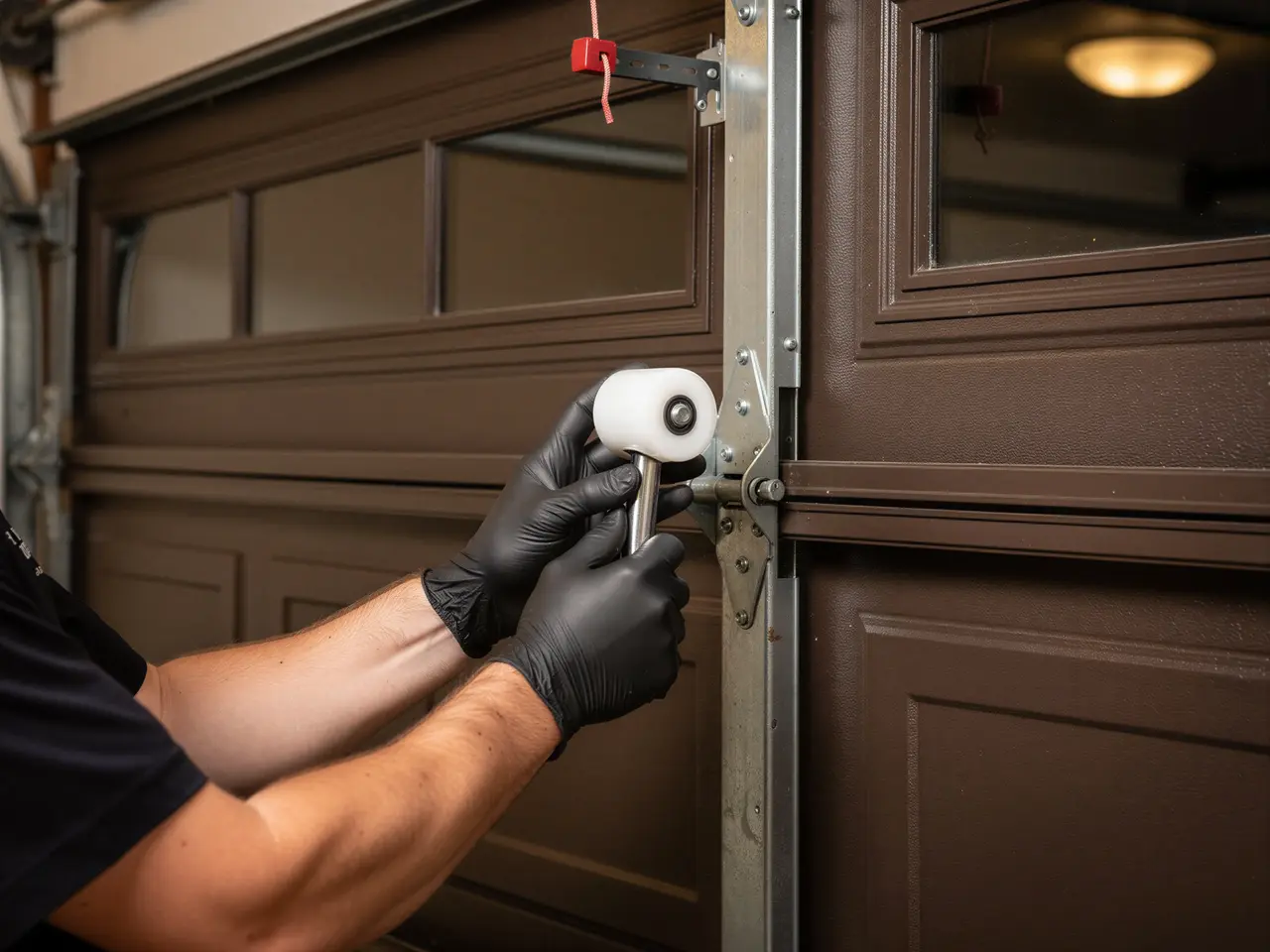
Doffing sits squarely in the 1987-2005 building window that defines most of this area, and the houses here tend to cluster right around 1998. That matters for rollers because builder-grade doors from that stretch almost always shipped with 7-ball steel rollers riding on plain bearings, sometimes paired with nylon sleeves that have long since gone brittle. The truck carries both styles - standard steel and the quieter nylon upgrade - along with the stems and bearing sizes that fit late-1990s track systems, so a swap doesn't wait on a parts order.
What the truck doesn't carry is every oddball roller from a custom or heavily modified door. If a previous owner swapped in a non-standard track or an odd-width roller stem, that's a look-and-order situation, not a same-visit fix. Most doors in Doffing don't have that problem - the track hardware from this era is about as standard as it gets - but it's worth saying plainly instead of promising a universal fix that doesn't exist.
Rollers rarely fail alone. On a 1998-era door, worn rollers usually mean the hinges and end bearing plates are close behind, so the job often includes a quick check of those parts even when the call was just about noise.
The Cost of This Job
Doffing's median household income runs near $26,525, less than half the $48,777 median across the wider service area this company covers. That gap matters here more than it would somewhere with a higher income base - it's the difference between a roller swap and a full door replacement, and on a budget like this one, the cheaper fix is usually the right call if the door itself is sound.
Roller replacement on a 1990s-built door is almost always the lower-cost option compared to replacing the whole door, and it's often cheaper than people expect once they hear "garage door repair" and brace for a big number. Steel rollers cost less than nylon; nylon runs a bit more but runs quieter and doesn't need grease, which matters once you factor in how often South Texas heat breaks lubricant down.
What isn't worth doing is throwing money at rollers on a door whose track is bent or whose opener is already failing. If the rollers are a symptom of a bigger problem, replacing just the rollers is a short-term patch, and saying so up front beats a callback in six weeks.
Where This Job Goes Sideways
The severe heat load this region carries doesn't just make the garage uncomfortable - it cooks the grease out of steel roller bearings faster than milder climates would, and it's hard on nylon rollers too, since repeated heat cycling is what makes that plastic go brittle and crack at the stem. On a door that's sat through roughly two decades of that cycle, a roller that looks fine on the outside can already be seized or flat-spotted on the inside.
The other way this goes sideways is track condition. A roller that's been grinding instead of rolling will usually have worn a groove into the track itself, and once that happens, a fresh roller in a damaged track just grinds again inside a few months. That's a track straightening or track replacement job layered onto what started as a roller call, and it changes both the time on site and the cost.
Rust is a smaller but real factor - end bearing plates on original 1990s hardware sometimes weld themselves to the shaft with corrosion, and backing that fastener out wrong can crack the plate. Worth knowing before anyone goes in with a wrench and no plan.
How It Shows Up
On a door built in Doffing's main construction years, a failing roller usually announces itself before it fails completely. The first sign is noise - a rhythmic grinding or clicking that matches the door's movement, getting louder as the roller bearing wears flatter. People often blame the opener first, since that's the part that makes the obvious motor noise, but a bad roller produces its own distinct sound separate from the motor.
The second sign is a door that hesitates or jerks at a specific point in the track rather than moving smoothly top to bottom. That hitch is usually where a flat-spotted roller hits the same spot in the curve of the track every cycle. If it's happening at the same point every time, that's a roller problem more often than an opener problem.
The third sign, and the one that should get a call sooner rather than later, is visible wear - a roller stem bent out of true, or a wheel with chunks missing from the edge. At that point the roller isn't slowing anything down, it's about to come off the track entirely, and that's a stuck-door call instead of a routine one. See more on Doffing or check the Mission roller replacement page for the full-service writeup.
Frequently asked questions
How far out is Doffing from your shop in Mission?
It's about a six-mile drive from Mission to Doffing. That's close enough that a roller job here fits into a normal route without turning into a special trip, which is part of why it's worth calling for something as small as a noisy roller instead of living with it.
Are the rollers on my Doffing house a standard size?
Most houses in Doffing went up around 1998, which puts them in a well-documented era for garage door hardware. Steel and nylon 7-ball rollers from that period are common and usually stocked, though a door with custom or swapped-out track hardware may need a size checked before the job.
Is it cheaper to replace rollers or the whole door?
Rollers are almost always the cheaper fix, and that's usually the right call if the door panels and track are in decent shape. Replacing the whole door only makes sense when the rollers are a symptom of bigger problems - bent track, failing opener, warped panels - not when they're the only issue.
Why do my rollers keep wearing out faster than I'd expect?
This area sits in a severe heat band, and that heat cycle is hard on both steel bearings and nylon rollers - it dries out grease faster and makes plastic rollers brittle over time. A door that's a couple decades old has been through a lot of those cycles already.
Book garage door service in Mission
Call now or request a quote - tell us what the door is doing and where you are.